Helping Cover The Gaps In Original Medicare
Medicare Supplement insurance, often called Medigap, is designed to help cover certain healthcare costs that Original Medicare does not fully pay. While Original Medicare provides important coverage for hospital and medical services, beneficiaries are still responsible for deductibles, coinsurance, and other out-of-pocket expenses.
Medicare Supplement plans are offered by private insurance companies and work alongside Original Medicare to help reduce these costs. By filling the gaps left by Medicare, these plans can make healthcare expenses more predictable and provide greater financial protection.
What Medicare Supplement Plans Cover
Original Medicare pays a portion of approved medical costs, but it does not cover everything. Medicare Supplement plans help pay many of the remaining expenses, depending on the specific plan selected.
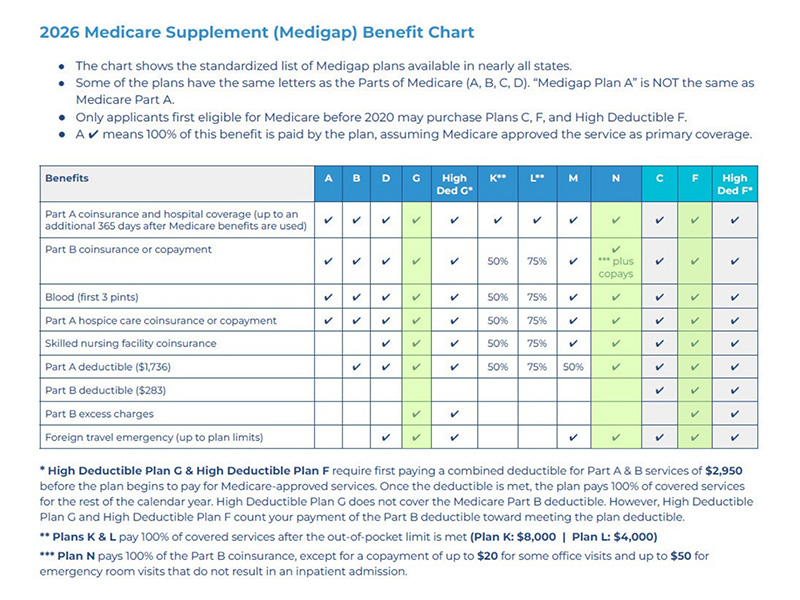
Common costs that Medigap plans may help cover include:
- The Medicare Part A deductible and hospital coinsurance
- Part B coinsurance or copayments for doctor visits and outpatient care
- Skilled nursing facility coinsurance
- The first three pints of blood needed for a medical procedure
- Emergency medical care during foreign travel within plan limits
Medicare Supplement plans work with Original Medicare, meaning Medicare pays its share of approved costs first. The Medigap plan then helps cover eligible remaining expenses based on the benefits of that plan.
It is important to note that Medigap plans do not include prescription drug coverage. Dental, vision, hearing services, and long-term care are also not typically included.

Standardized Medicare Supplement Plans
Medicare Supplement plans are standardized by the federal government. This means that the basic benefits for each plan type are the same regardless of the insurance company offering it.
For example, a Plan G from one company provides the same core benefits as a Plan G from another company. The primary differences between companies are usually the monthly premium, customer service, and additional support provided by the insurer.
Understanding Medicare Supplement Costs
The monthly premium for a Medicare Supplement plan can vary based on several factors.
These may include:
- Your age and the pricing structure used by the insurance company
- Your location, since premiums can vary by region
- The insurance company offering the plan
- In some cases, gender, depending on state rules
- Your health status if applying outside of your guaranteed enrollment period
While premiums vary, Medicare Supplement plans can help reduce unpredictable healthcare costs by covering many of the expenses that Original Medicare leaves behind.
Popular Medicare Supplement Plan Options
Several Medicare Supplement plans are commonly chosen by beneficiaries based on their coverage preferences and budget.
Choosing The Right Medicare Supplement Plan
Medicare Supplement plans can offer peace of mind by helping manage healthcare costs and allowing you to see any doctor who accepts Medicare without network restrictions.
Strive Medicare helps individuals and families in the La Crosse area review available Medicare Supplement plans, compare costs, and understand how each option works. With the right guidance, you can choose a plan that provides the financial protection and flexibility you want for your healthcare coverage.

No Sales Pitch. Just Straight Talk About Medicare.
Strive Medicare hosts educational workshops designed to help you better understand your Medicare coverage options before making important decisions about your healthcare. In a relaxed, informative setting, you will gain clear insight into the different types of plans available, including Medicare Advantage, Medicare Supplement, Prescription Drug Plans, and Medicare Add-On coverage.
During the workshop, you will learn how each option works, how they compare, and what strategies may help reduce your overall healthcare costs. Our knowledgeable team is here to answer your questions and walk you through your choices so you can confidently select coverage that fits your health needs, budget, and future plans.